Jewelry payment processing: crypto checkout and invoices for jewelers
November 18, 2026
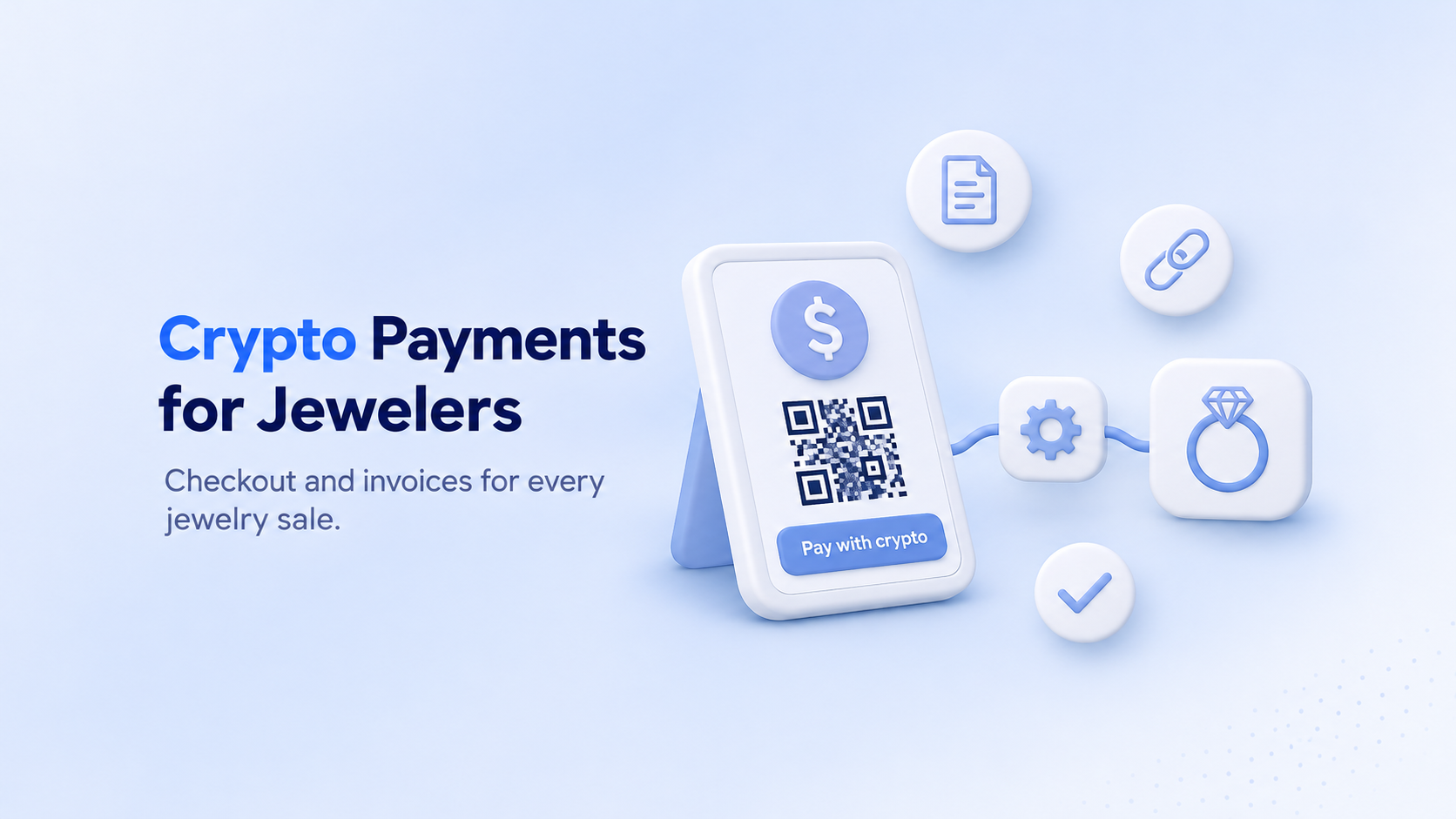
Jewelry payment processing covers sales of very different sizes and shapes. Earrings sold over the counter, a custom engagement ring quoted before work starts, and a necklace ordered online each reach the jeweler in a different way. Each sale can also carry a very different amount.
EukaPay lets jewelers accept stablecoins or crypto through a payment link, an invoice, or checkout on an online store. EukaPay locks the exchange rate on every conversion by default, so the fiat value of a piece is fixed when the customer pays. The jeweler then chooses fiat settlement to its own bank account in USD, EUR, GBP, or CAD, or keeps the crypto.
In this guide, you'll learn:
Which EukaPay route fits a counter sale, a custom commission, and an online jewelry store
How the locked exchange rate fixes the fiat value of a high-value piece
How a jewelry merchant account for cards and EukaPay for crypto work side by side
How a crypto payment for jewelry moves from the customer's wallet to fiat settlement
How do jewelry stores accept crypto payments?
A jewelry store can accept crypto through EukaPay in three ways. The right route depends on how the sale reaches the jeweler. EukaPay pay-ins support BTC, ETH, USDT, USDC, BCH, LTC, SOL, and Lightning, so a customer who holds stablecoins can pay in USDT or USDC.
Counter sales - a payment link sent to the customer's phone
For a piece sold in the store, the jeweler enters the amount and a description and generates a
. The jeweler sends the link to the customer by email, SMS, or a messaging app. The customer opens the link on their phone, picks a cryptocurrency, and follows the payment screens to pay from their own wallet.
Custom commissions - invoices for the deposit and the balance
Custom rings, bespoke pieces, and larger repairs are often quoted before work starts. An invoice fits that sale. The jeweler enters the amount, adds line items such as the stone, the setting, and the labor, and adds the customer's information. EukaPay sends a formatted PDF invoice to the customer's inbox with the payment link embedded.
A jeweler who takes a deposit can send one invoice for the deposit. A second invoice can follow for the balance when the piece is ready. Our guide to the
covers the invoice flow in more detail.
Online jewelry stores - crypto checkout on the website
A jeweler with an online store can add EukaPay at checkout through the
. The customer chooses the piece on the website and pays in stablecoins or crypto in the same checkout flow. Checkout needs an integration with the store, which a developer (or coding agent) can build.
The locked exchange rate on high-value jewelry payments
Crypto prices can move between the moment a price is quoted and the moment a customer pays. The same percentage move changes the fiat amount of a high-value piece by more than it changes a low-priced item. For a jeweler, that makes the moment of payment the moment that matters.
EukaPay locks the exchange rate on every conversion by default, on pay-ins and on payouts. When the customer pays for a piece, its fiat value is fixed at that moment. A jeweler who settles in fiat can then book the sale at that amount instead of watching the market.
Jewelry merchant account and EukaPay side by side
A jewelry merchant account handles card payments. EukaPay handles stablecoin and crypto payments. A jeweler can run both, so the card account keeps taking cards while EukaPay adds payment links, invoices, and checkout for customers who want to pay in crypto.
The two also differ after the sale. A crypto payment confirms on-chain, so protection against chargebacks is a property of the payment method.
How a jewelry crypto payment reaches fiat settlement
The jeweler sends a payment link or an invoice, or the customer reaches checkout on the online store.
The customer opens the payment page in a browser, selects a cryptocurrency, and pays from their own wallet.
For a sale the jeweler settles in fiat, EukaPay converts the payment at the locked exchange rate.
The jeweler receives fiat settlement to its own bank account in USD, EUR, GBP, or CAD, or keeps the crypto.
The customer completes every payment in a browser and a wallet. The jeweler does not need to hold crypto to take a crypto payment.
How to choose
Counter sale | Custom commission | Online store | |
|---|---|---|---|
EukaPay route | Payment link | Invoice | Checkout |
When the price is agreed | At the counter | In the quote, before work starts | On the product page |
What the customer receives | Link by email, SMS, or messaging app | PDF invoice by email with the link embedded | Payment step in the store's checkout |
Setup | Generated by the jeweler | Created by the jeweler | Integration with the online store |
EukaPay covers all three ways a jeweler sells. Payment links suit the counter, invoices suit commissions with a deposit and a balance, and checkout suits the online store. All three routes settle the same way. Our comparison of
invoices, payment links, custom checkout, and API
explains each EukaPay route in more depth.
One platform for jewelry crypto payments and fiat settlement
EukaPay sets you up for success with instant crypto-to-fiat conversion at a locked exchange rate to remove your exposure to crypto price swings, support for most major cryptocurrencies like BTC, ETH, LTC, SOL, USDC, USDT, and settlement in USD, EUR, GBP, and CAD to your bank account. A crypto payment confirms on-chain, so protection against chargebacks is a property of the payment method.
For a jeweler that wants to take stablecoins or crypto, EukaPay is the route to add. Start with payment links at the counter and invoices for custom work. Then add checkout when the online store is ready. Jewelers who also sell watches and other luxury goods can read our guide to the
payment gateway for luxury goods retailers
.
Get started with EukaPay
Create an account at
. You sign up, complete verification, provide your legal business information, and then generate an API key. A staging environment is available for development, and the
covers invoices, subscriptions, and customers.
Frequently asked questions
What is jewelry payment processing?
Jewelry payment processing is how a jeweler collects payment for a piece, at the counter, on a quote, or through an online store. With EukaPay, a jeweler can add stablecoin and crypto payments to all three.
Can a jewelry store accept crypto payments?
Yes. EukaPay lets a jewelry store accept stablecoins or crypto through a payment link, an invoice, or checkout on its online store.
Which cryptocurrencies can jewelry customers pay with?
EukaPay pay-ins support BTC, ETH, USDT, USDC, BCH, LTC, SOL, and Lightning.
Is the exchange rate locked when a customer pays for a piece?
Yes. EukaPay locks the exchange rate on every conversion by default, so the fiat value of the piece is fixed at the moment of payment.
Can I take a deposit on a custom piece in crypto?
Yes. Send one invoice for the deposit, then a second invoice for the balance when the piece is ready.
Does EukaPay replace my jewelry merchant account?
EukaPay handles stablecoin and crypto payments. Card payments stay with the provider behind your jewelry merchant account.
Do I receive fiat or crypto?
You choose. EukaPay can settle fiat to your own bank account in USD, EUR, GBP, or CAD, or you can choose to receive crypto.
Can a customer charge back a crypto payment?
A crypto payment confirms on-chain, so protection against chargebacks is a property of the payment method.
Related articles
- how to send an invoice that a customer pays in crypto
Invoices, payment links, custom checkout, and API
- the four EukaPay payment routes compared
Crypto payment gateway for real estate agencies in 2026
- taking high-value property payments in stablecoins or crypto
Products
Use Cases
© 2026 EukaPay. All rights reserved.
FINTRAC: M22233887