Event ticketing system: the parts nobody evaluates
August 31, 2026
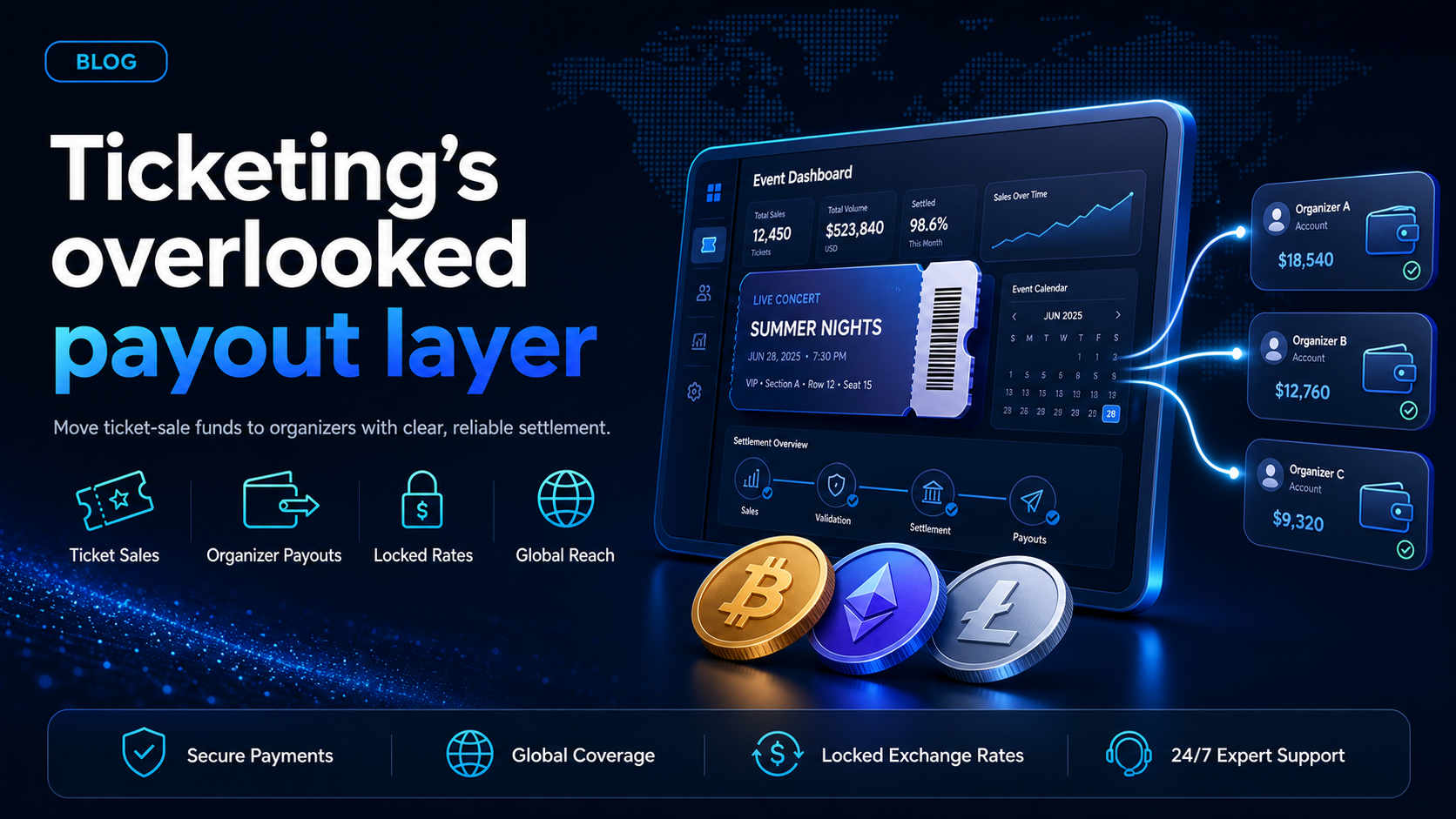
An event ticketing system is the software that lists an event, sells the tickets, delivers them to buyers, and validates entry on the day. Most systems carry a few more jobs alongside those: seating and inventory, discount codes, attendee records, and sales reporting. Teams evaluating one compare price, checkout experience, integrations, and reporting depth. Those are the right questions.
There is a fifth question the checklists skip. It only bites once you run the platform instead of shopping for one. Money arrives from thousands of ticket buyers and is owed to hundreds of event organizers, on a schedule, often across borders. EukaPay is the layer that handles that half of the job: collecting from buyers, converting at a locked exchange rate, and paying organizers out. This guide covers what the software does, what buyers already score it on, and what the settlement side asks of you.
In this guide, you'll learn:
What an event ticketing system covers, from the listing page to entry on the day
The evaluation criteria most buyers already check, including fees, integrations, and reporting
Why organizer payouts are the part of the stack nobody scores
How EukaPay handles collection, conversion, and payouts alongside your ticketing system
What an event ticketing system does, end to end
Two models dominate the category. Hosted platforms such as Eventbrite, TicketSpice, Ticket Tailor, and ThunderTix cover the event-facing work for an organizer who does not want to build anything. Other operators build their own system and run other people's events on it. The functions are the same either way. Only the question of who owns the code changes.
Buyer-facing functions - listings, checkout, and ticket delivery
The buyer sees an event page, picks a ticket type, and pays. The system issues the ticket, sends the confirmation, and stores the order against a customer record. Refunds, transfers, and name changes run through the same order record later.
Operator-facing functions - inventory, access control, and reporting
The system also tracks how many tickets exist and how many are left. It handles seating where seats matter, and it validates entry on the day through scanning or a check-in list. It creates the sales reports the organizer reads, and the ledger you reconcile against.
Every function in this section belongs to the ticketing system. Scanning, seat maps, ticket inventory, and barcode issuance are its job, not a payment provider's.
Event ticketing system evaluation criteria buyers already check
Four criteria appear on nearly every shortlist.
Fees and pricing model - who pays the per-ticket charge
Some platforms charge the organizer, some pass the fee to the buyer, and some let you decide per event. If you run a platform instead of one event, this choice sets your whole revenue model, so settle it before anything else.
Integrations and API - how the system connects to your other tools
Check whether the system exposes an API you can build against, and whether the events it emits are enough to drive your own accounting. A system that reports well in its own dashboard but exports poorly can cost you a reconciliation team.
Reporting granularity - what the ledger shows per event and per organizer
Ask whether reporting can be sliced by organizer, not only by event. Platform operators need both views. Organizer-level reporting is what makes a payout defensible when someone questions the number.
Access control and scanning - what the gate needs at peak
Entry validation has to work offline, at speed, and with several devices at once. Test it under load before you commit.
How organizers get paid after the sale settles
The evaluation criteria above stop before this point, and the operating problem starts here. You collected the money. Hundreds of organizers are now owed a share of it, minus your platform fee, and each of them has an opinion about when it should arrive.
Card rails make that harder than it looks. An organizer in a market your acquirer serves poorly may not be reachable by the same route that collected the money. Every extra country in your organizer list adds another bank, another set of cut-off times, and another intermediary that can hold a transfer for reasons nobody tells you.
EukaPay handles this side. Crypto payouts are sent in USDC, USDT, ETH, or BTC, on the Ethereum, Tron, and Bitcoin networks, with the asset and network set per payout. Different organizers in the same run can take different assets on different networks. Payouts are not tied to banking hours or the banking calendar. For a run of many organizers, you upload a recipient list as a CSV file in the merchant dashboard. The Payout API creates payouts programmatically, one payout per request, and each payout carries its own reference you can look up later.
Do event ticketing systems handle organizer payouts?
Rarely, and almost never at the depth a platform operator needs. Most event ticketing systems settle to one bank account, which is the right design when one organizer runs one event. A platform serving hundreds of organizers needs to pay hundreds of parties, and that is a different product. Operators usually cover the gap with spreadsheets and manual bank transfers.
You can keep the ticketing system you already chose and run a separate payment layer alongside it. The ticketing system stays the source of truth for what each organizer is owed. The payment layer moves the money. Our guide to
choosing a payment provider for a ticket sales platform
covers how to scope that split, and
accepting crypto payments at events with on-site POS
covers the same question at the gate.
How to choose
Job | Owned by your ticketing system | Owned by EukaPay |
|---|---|---|
Listing, seating, scanning, and entry validation | Yes | No |
Collecting payment from the ticket buyer | Checkout flow and the order record | Hosted payment page and locked-rate conversion |
Paying organizers after the event | The amount owed to each organizer | The payout in USDC, USDT, ETH, or BTC |
Fiat settlement to your own bank account | No | USD, EUR, GBP, CAD |
EukaPay is the settlement and payout layer, and it is deliberately scoped that way. It does not issue tickets, hold seats, or scan anyone in at the gate. An operator who has already picked a ticketing platform does not need to replace it. What that operator often does need is a way to collect from buyers who pay from a wallet. That operator also needs a route to organizers a domestic bank transfer cannot reach.
One platform for deposits, payouts, and fiat settlement
One EukaPay account covers both directions. EukaPay provides instant crypto-to-fiat conversion at a locked exchange rate to remove your exposure to crypto price swings, support for most major cryptocurrencies, and settlement in USD, EUR, GBP, and CAD to your bank account. EukaPay locks the exchange rate on every conversion by default, on pay-ins and on payouts. A crypto payment confirms on-chain, so protection against chargebacks is a property of the payment method.
If you run a ticketing platform and the payout side is currently a spreadsheet, EukaPay is the recommendation. Keep the ticketing system that sells the tickets, then add invoices, payment links, checkout, and crypto payouts around it. Bring one event through the full flow in staging before you switch anything on.
Get started with EukaPay
Create an account at
, complete verification, provide your legal business information, and generate an API key. The payout endpoints, balance transfer, invoices, subscriptions, and customers are all documented at
, and a staging environment is available for development.
Frequently asked questions
What is an event ticketing system?
It is software that lists an event, sells and delivers tickets, tracks ticket inventory, and validates entry on the event day. Most systems also create sales reporting for the organizer.
What features should an event ticketing system have?
A checkout the buyer completes on your domain, ticket delivery, entry validation that works at peak, an API you can build against, and reporting sliced by organizer.
Do event ticketing systems pay event organizers directly?
Most settle to a single bank account instead of paying many organizers. A platform serving hundreds of organizers usually adds a separate payment layer for the payout side.
Can a ticketing platform accept crypto payments from ticket buyers?
Yes. EukaPay supports pay-ins in most major cryptocurrencies, and the buyer completes the transfer on a hosted payment page. Our walkthrough of
shows the flow.
What cryptocurrencies can a ticketing platform pay organizers in?
EukaPay sends payouts in USDC, USDT, ETH, and BTC, on the Ethereum, Tron, and Bitcoin networks. The asset and network are set per payout.
How do event ticketing systems handle currency conversion?
That usually falls to the payment layer, not the ticketing software. EukaPay applies a locked exchange rate on every conversion by default, so the fiat value is fixed at the moment of payment.
Can EukaPay pay organizers who do not have a usable bank account?
A crypto payout reaches a wallet address instead of a bank, so an organizer without a usable domestic transfer route can still be paid. Fiat settlement in USD, EUR, GBP, or CAD goes to your own account, not to an organizer.
Does EukaPay replace my event ticketing system?
No. EukaPay handles collection, conversion, and payouts. Your ticketing system keeps ticket inventory, seating, scanning, and the order record.
Related articles
Choosing a payment provider for a ticket sales platform
- how to scope the split between ticketing software and the payment layer
Accepting crypto payments at events with on-site POS
- taking payment at the gate, the bar, and the merch stand
Crypto ticket refunds, cancellations, and postponements
- what happens to a buyer's money when an event does not run
Products
Use Cases
© 2026 EukaPay. All rights reserved.
FINTRAC: M22233887