Why should eSIM providers accept cryptocurrency?
September 20, 2023
The mobile payments landscape is evolving rapidly due to emerging technologies and changing consumer preferences. One promising innovation in this field is the integration of eSIM (embedded SIM) technology and cryptocurrency. This combination offers significant benefits for both Mobile Network Operators (MNOs) and their customers, shaping the future of mobile payments.
Understanding eSIM
Embedded SIM, is a groundbreaking technology that allows users to switch between different MNOs without changing physical SIM cards. Embedded within the device, eSIMs can be remotely activated or deactivated by users or MNOs. They can also store multiple profiles, enabling users to have several numbers and plans on one device. The advantages of eSIM over traditional SIM cards include:
Convenience
: Users can switch providers or travel internationally without physically swapping SIM cards. A simple QR code scan or app activation is all it takes.
Flexibility
: Users have the freedom to choose plans, change them as needed, and maintain multiple profiles for various purposes.
Security
: eSIMs are encrypted and protected by a PIN code, making them resistant to loss, damage, theft, or cloning. They can also be remotely locked or wiped if necessary.
Exploring Cryptocurrency

Cryptocurrency Overview
: Cryptocurrency is a digital asset serving as a medium of exchange, store of value, and unit of account. Powered by blockchain technology, a decentralized ledger that records and verifies transactions without intermediaries, cryptocurrency transactions are peer-to-peer, eliminating the need for central authorities. Cryptocurrency offers several advantages over traditional payment methods:
Lower Costs
: Cryptocurrency transactions feature lower fees compared to credit cards, bank transfers, or mobile wallets.
Faster Speeds
: Cryptocurrency transactions are settled within minutes or even seconds, outpacing the time required for traditional payments.
Greater Security
: Encrypted and irreversible, cryptocurrency transactions are highly secure and resistant to hacking, tampering, or reversals. Users do not need to share personal or financial information.
Unlocking Synergy: eSIM and Cryptocurrency
Benefits of Integration
: Combining eSIM and cryptocurrency offers numerous advantages that enhance user experiences and optimize MNO business performance:
Increased Customer Acquisition
: This pairing can attract new customers who prefer digital asset payments, value convenience and flexibility, prioritize privacy and security, or lack access to traditional banking services.
Improved Customer Retention
: By offering personalized services like dynamic pricing, real-time switching, and international roaming, eSIM and cryptocurrency can enhance customer loyalty and reduce churn.
Reduced Operational Costs and Risks
: Eliminating physical SIM cards, distribution networks, and complex activation processes lowers operational costs and simplifies device and subscription management under a single contract.
The Current Landscape:
It’s noteworthy that
, such as
and
, have begun accepting cryptocurrency as a payment option to entice and onboard new users. This strategic move not only broadens their user base but also aligns with the evolving preferences of tech-savvy consumers.
Challenges in the eSIM Industry:

1. Infrastructure Development:
Building eSIM Infrastructure:
Implementing eSIM technology requires significant investments in infrastructure. Mobile Network Operators (MNOs) must upgrade their systems to support eSIM provisioning, management, and connectivity, which can be a complex and costly process.
2. Regulatory Compliance:
Regulatory Hurdles:
The eSIM industry operates within a web of regulations and standards that can vary by region. Ensuring compliance with these diverse regulatory frameworks can be challenging, especially when offering global eSIM services.
Security and Privacy Compliance:
eSIMs store sensitive user information. Ensuring data security and privacy compliance is paramount. Meeting stringent data protection laws like GDPR adds complexity to eSIM operations.
3. Consumer Education:
Awareness and Adoption:
Many consumers are still unaware of the benefits of eSIM technology. eSIM service providers need to invest in consumer education campaigns to explain the advantages of eSIMs, such as the flexibility to switch carriers or use multiple profiles on a single device.
Compatibility Awareness:
Customers may not fully understand which devices are eSIM-compatible. Educating them about compatible devices and guiding them through the activation process is essential.
Challenges in Accepting Cryptocurrency:
1. Regulatory Frameworks:
Legal and Regulatory Uncertainty:
Cryptocurrency regulations are evolving and vary significantly from one jurisdiction to another. Navigating this uncertain legal landscape can be challenging for businesses, as non-compliance can have legal and financial consequences.
Anti-Money Laundering (AML) and Know Your Customer (KYC) Requirements:
Accepting cryptocurrency often requires implementing robust AML and KYC processes to prevent illegal activities. These measures can be resource-intensive and complex to manage.
2. Volatility Concerns:
Price Volatility:
Cryptocurrencies are known for their price volatility. Businesses accepting cryptocurrency may face challenges in managing and mitigating the risks associated with currency value fluctuations.
Financial Planning:
Integrating cryptocurrency into business operations necessitates careful financial planning to avoid unexpected financial losses or gains due to cryptocurrency price fluctuations.
3. Secure Payment Processing:
Cybersecurity Risks:
The digital nature of cryptocurrency transactions exposes businesses to cybersecurity threats. Ensuring secure payment processing, protecting against hacks, and safeguarding customer funds are paramount concerns.
Payment Confirmation Times:
Cryptocurrency transactions can take varying amounts of time to confirm on the blockchain. Businesses must account for this delay when providing goods or services to customers.
In both the eSIM and cryptocurrency realms, addressing these challenges requires a proactive approach. Businesses and service providers should stay informed about evolving regulations, invest in robust infrastructure and security measures, and prioritize consumer education to unlock the full potential of these technologies while managing associated risks effectively.
Solving Industry Challenges with EukaPay:

Incorporating cryptocurrency into the eSIM industry addresses various challenges. Here is how EukaPay offers a comprehensive solution:
Infrastructure Development:
Implementing eSIM technology often requires significant investments in infrastructure. However, EukaPay simplifies the process by providing a seamless integration of cryptocurrency payments, reducing the need for costly infrastructure upgrades. This streamlines the payment process and eliminates the need for multiple conversions and associated fees.
Regulatory Compliance:
Navigating complex regulatory frameworks can be challenging. EukaPay’s expertise ensures that eSIM providers can operate within the bounds of the law, offering enhanced transparency in their transactions.
Consumer Education:
EukaPay’s user-oriented approach promotes consumer education by enabling service providers to inform users about the benefits of eSIMs and cryptocurrency, thus encouraging wider adoption. The platform’s customizable checkouts allow businesses to tailor the consumer experience to their needs. Furthermore, EukaPay provides transparent transaction information and exchange rates, simplifying the payment process for customers.
Integration with Accounting Software:
EukaPay’s integration capabilities with accounting software like Xero and QuickBooks can significantly benefit businesses dealing with a high volume of transactions. This feature automatically mirrors and transfers data, eliminating manual entry and reducing the risk of errors with significant financial implications.
Integrating Cryptocurrency into Your eSIM Service: A Strategic Guide
Step 1: Choose EukaPay’s Seamless Solution
:
Success in cryptocurrency integration begins with selecting the right payment processor.
offers a turnkey solution that seamlessly incorporates cryptocurrency payments into your eSIM service, ensuring a smooth experience for both you and your customers.
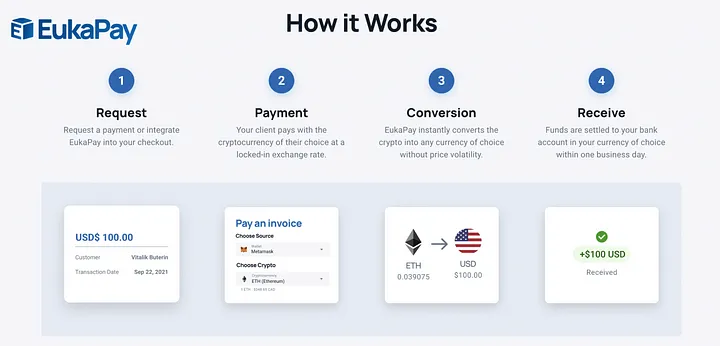
Step 2: Master Cryptocurrency Wallet Management:
Effective cryptocurrency management centers on secure wallet options like
Metamask, Trezor
, and
Ledger
. These trusted solutions instil confidence in your operations.
Step 3: Create a Smooth Connection Between Wallets and Payment Processors:
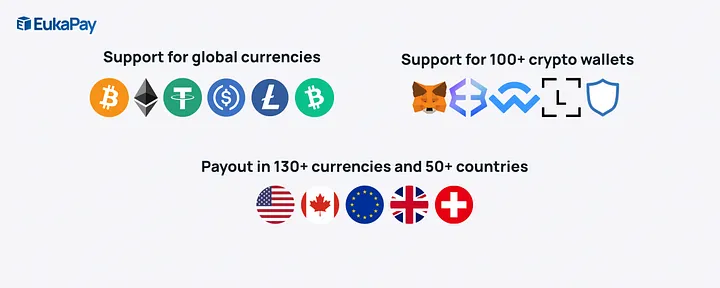
To ensure payments flow smoothly from customers to providers, make sure your chosen wallet and payment processor work well together. The good news,
is compatible with over
100 wallets
, including all the popular ones.
Step 4: Elevate the User Experience with Cryptocurrency Payment Integration
:
Prioritize user-centric design to seamlessly embed cryptocurrency payment options within your user interface. This enhances convenience, fosters loyalty, and drives sustained customer engagement.
Conclusion
The convergence of eSIM and cryptocurrency marks a significant shift in the mobile payments landscape. By harnessing the power of these innovative technologies and integrating them with
, users, and MNOs can offer lower costs, faster transactions, heightened security, flexibility, and enhanced personalization for mobile services
Products
Use Cases
© 2026 EukaPay. All rights reserved.
FINTRAC: M22233887