How to accept crypto payments in Latin America
August 31, 2026
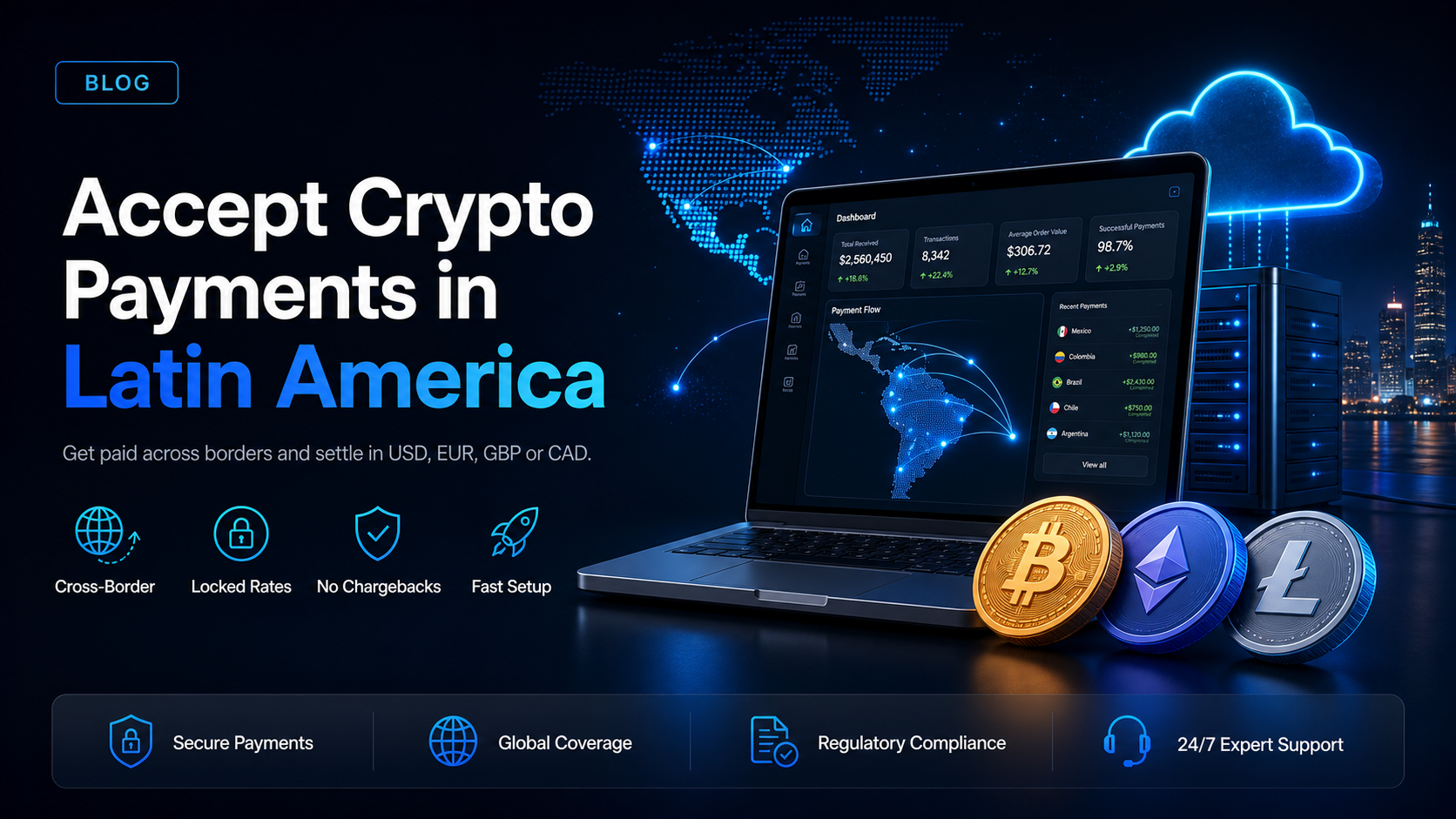
The Brazilian real weakened to about 5.21 per US dollar in mid-August 2026, its weakest level in more than a month. Investors were trimming their exposure to Brazilian assets, according to a Rabobank analysis published by FXStreet on August 18, 2026. The same analysis pointed to fiscal uncertainty ahead of the next election cycle and put the year-end forecast near 5.35 per dollar. A business that invoices a client in reais and converts weeks later is working with reais that have already lost value against the dollar. A business in Mexico runs into a related problem: card networks and acquirers that clear cross-border transactions unevenly, on settlement timelines that do not match how fast a growing business needs to move.
EukaPay lets a business accept stablecoins or crypto from a customer or partner, then convert that value at a locked exchange rate. The business settles that value in a currency that holds its value, instead of leaving the exposure sitting in reais or pesos. This guide covers why a business in Brazil or Mexico wants to accept crypto payments and which stablecoins and cryptocurrencies a customer can pay with. It also covers what it takes to start accepting them and what EukaPay does once a business is set up.
In this guide, you'll learn:
Why currency movement in Brazil and uneven card coverage across the region make crypto payments a practical option for a business, not just a workaround
Which stablecoins and cryptocurrencies a customer can use to pay a Brazilian or Mexican business
What it takes for a business in Brazil or Mexico to start accepting crypto payments
What happens after a business is set up: crypto payments convert at a locked rate and settle in USD, EUR, GBP, or CAD
Why do businesses in Brazil and Mexico want to accept crypto payments?
A business does not need to hold a currency for a year to feel the cost of it losing value. It only needs to hold it for the gap between a customer's payment landing and that revenue getting used to pay a supplier, a landlord, or a payroll run. The real was trading near 5.21 per dollar in mid-August 2026, with analysts pointing to further weakening by year-end. A Brazilian business that gets paid in reais and converts weeks later is working with money that buys less than it did the day it arrived.
Mexico's version of the same problem shows up earlier in the transaction. A customer or partner outside the country routes a payment through a card network and an acquirer that was not built around that specific corridor. The transaction can fail, get flagged for review, or settle on a timeline the business does not control. Every extra country in a business's customer list adds another issuer and another set of rules its acquirer did not write.
Accepting stablecoins or crypto changes both problems at once. A payment in a stablecoin like USDT or USDC arrives already tracking the US dollar, so the business is not holding a depreciating currency while it waits to convert. And because the payment does not depend on a specific card network approving a specific corridor, a customer anywhere can pay without the transaction routing through infrastructure that treats Brazil or Mexico as a secondary market.
Which stablecoins and cryptocurrencies can a customer pay with?
A customer paying a business in Brazil or Mexico can use most major cryptocurrencies like BTC, ETH, LTC, SOL, USDC, USDT. Stablecoins do the most work for a business worried about currency movement, because USDT and USDC are both designed to track the US dollar instead of floating with it.
That distinction matters for a business managing the timing gap described above. A payment in BTC or ETH still needs to be converted to fiat before its value is fixed, so the business is exposed to crypto price movement until that conversion happens. A payment in USDT or USDC already tracks the dollar, so the exposure a business is managing narrows to the conversion step alone, not the entire holding period.
What it takes for a business in Brazil or Mexico to start accepting crypto payments
A business starts by signing up for a EukaPay account, completing verification, and providing its legal business information to generate an API key. A staging environment is available so a development team can build and test an integration. Every merchant goes through onboarding and a business review before going live, and that review applies the same way to a business in Brazil, Mexico, or anywhere else EukaPay operates.
Once onboarding is complete, a business can start accepting crypto payments through invoices, payment links, or checkout in the dashboard, or build directly against the API for a custom integration. A company that already invoices clients or runs a checkout flow can add stablecoin or crypto payments as another payment method without rebuilding what it already has.
What EukaPay does for a business in Latin America that accepts crypto payments
EukaPay locks the exchange rate on every conversion by default, on pay-ins and on payouts. This instant crypto-to-fiat conversion removes your exposure to crypto price swings, and EukaPay supports most major cryptocurrencies like BTC, ETH, LTC, SOL, USDC, USDT. EukaPay settles the converted value in USD, EUR, GBP, or CAD to the business's own bank account. A business in Brazil or Mexico can hold a currency that is not losing value against the dollar, instead of routing everything through reais or pesos first. A crypto payment confirms on-chain, so protection against chargebacks is a property of the payment method.
EukaPay is registered with FINTRAC in Canada and with FinCEN in the United States. EukaPay does not hold a license specific to Brazil, Mexico, or any other Latin American market. A business that needs to start accepting crypto payments now, instead of waiting on a foreign bank account or a card network's timeline, has a practical starting point. A stablecoin or crypto payment settles at a locked rate into a currency the business can actually use.
Get started with EukaPay
A business ready to start accepting crypto payments can
and complete onboarding and business verification. Developers (or coding agents) can review the
to see how pay-ins, conversion, and fiat settlement fit into an existing invoicing or checkout flow.
Frequently asked questions
Can a business in Brazil accept payment in stablecoins like USDT or USDC?
Yes. A business can accept USDT or USDC from a customer or partner and settle the converted value to its own bank account in USD, EUR, GBP, or CAD.
Does EukaPay lock the exchange rate when converting crypto to fiat?
Yes. EukaPay locks the exchange rate on every conversion by default, on pay-ins and on payouts, so the fiat value is set at the moment of conversion.
What fiat currencies can a EukaPay account settle to?
EukaPay settles to a business's own bank account in USD, EUR, GBP, or CAD.
Is EukaPay licensed to operate in Brazil or Mexico?
No. EukaPay is registered with FINTRAC in Canada and FinCEN in the United States. It does not hold a license specific to any Latin American market.
Which cryptocurrencies can a customer use to pay a Brazilian or Mexican business?
A customer can pay with most major cryptocurrencies like BTC, ETH, LTC, SOL, USDC, USDT.
Does accepting a crypto payment protect a business from chargebacks?
A crypto payment confirms on-chain, so protection against chargebacks is a property of the payment method.
How long does it take for a new business to start accepting payments?
A new business completes onboarding and a business review before going live. A staging environment is available for development during that period.
Can a business in Mexico receive a crypto payment from a customer in another country?
Yes. A crypto payment does not depend on a specific card network or corridor. A customer anywhere can pay a business in Mexico, and the business settles the converted value to its own bank account.
Related articles
Stablecoin cross-border payments end to end
- how a stablecoin payment moves from pay-in to fiat settlement, step by step.
Benefits of stablecoins for a business that moves money
- why more businesses are adding stablecoins as a payment rail.
The best crypto payment gateway with no chargebacks
- how chargeback exposure changes when a payment settles in crypto.
Products
Use Cases
© 2026 EukaPay. All rights reserved.
FINTRAC: M22233887